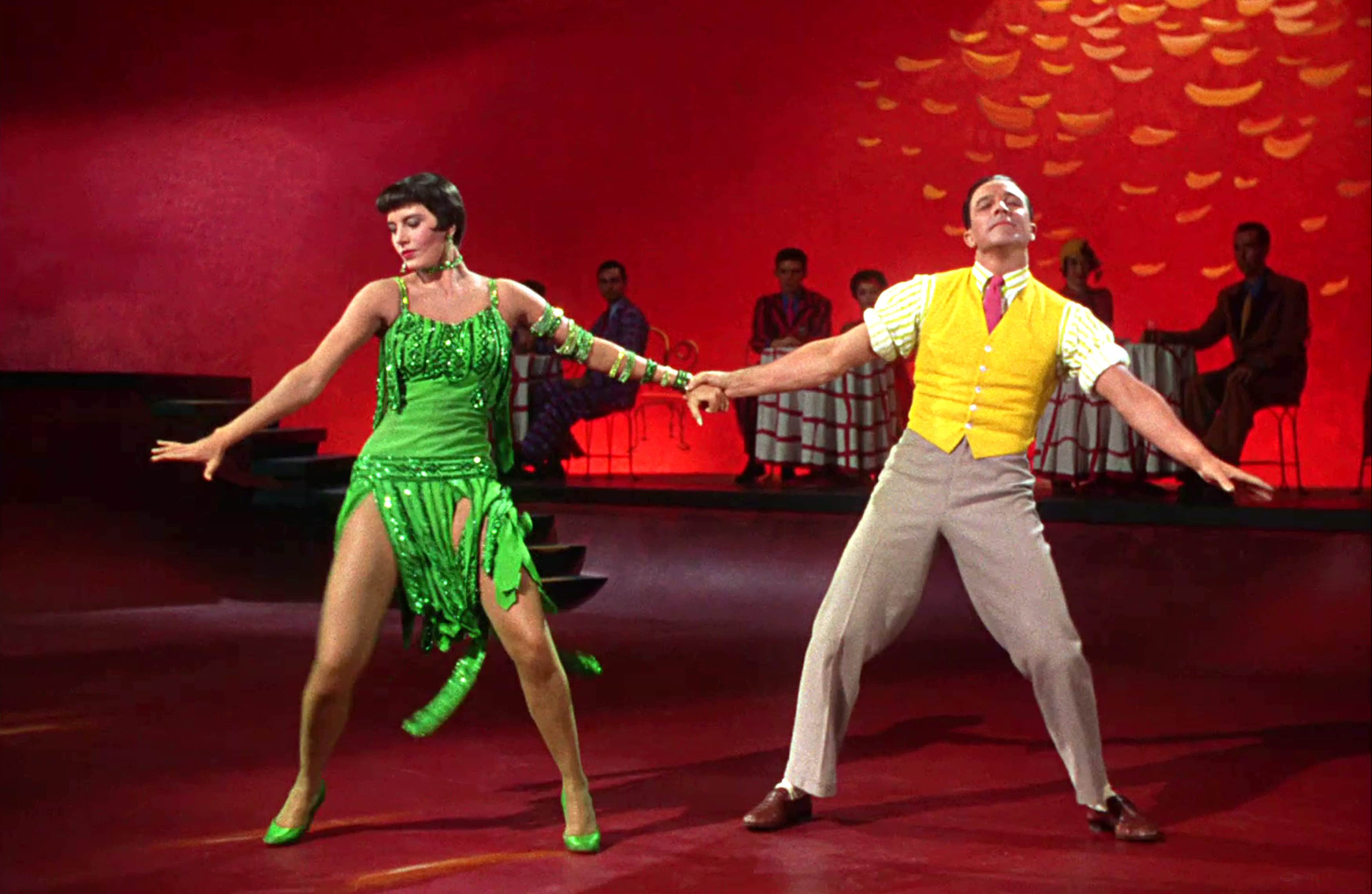
I have no memory of the first time I watched Singin’ in the Rain. As far as I’m concerned, it’s always been living in my mind, rent free.
I’m thinking in particular of a moment in high school where I was auditioning for a musical and did a dance audition that was heavily influenced by Donald O’Connor’s “Make ’em Laugh,” and I was cut short because it looked to everybody else like I was going to injure myself.
(I super would have. It was for the best.)
I’m a sucker for a backstage musical, but this one has the added bonus of playing with film history and peeking behind the curtain on just how much effort goes into movie magic. There’s enough here to make for a good Intro to Film History initial film screening. Even though this covers only a small portion of 20th century filmmaking, the history of film is the history of wrestling with technological innovation and disruption, over and over.
I love a story that peels back the layers of reality on something, and that plays with what we think we know is happening. For example, as cited here, in the scenes where Debbie Reynolds sings the audio that Jean Hagen’s character will lip sync to, the actual singing was Debbie Reynolds lip syncing to Jean Hagen’s pre-recorded singing. It’s such a meta, inside baseball detail and it makes me love it all the more.
There’s a great trick with the overall story, too. It does a great job of setting up Lockwood & Lamont as filmmaking royalty, then slowly building up cracks in that facade until the transition to talking pictures turns them into bumbling underdogs. It’s not just the industry-wide disruption that drives them, but the seeds of doubt Kathy plants in Don’s mind when she simultaneously rebuffs his sexual advances and his credibility as an artist. There’s both an internal and external push that drives the characters to put their best (dancing) foot forward in this new world of sound cinema.

 This Builds Character
1 Comment
Comments are closed.