45. Who’s Afraid of Virginia Woolf?

Look, sometimes I just like movies where people spend the majority of the running time slicing at each other with verbal daggers.

This is not a first date movie. This is not a quiet comfort film.

You put this on, you are going to probe deep into the infected wound at the heart of a marriage like a miniaturized explorer in Fantastic Voyage.

And for a certain type of person, that will be a good time. I am that type of person, I suppose.

44. The Exterminating Angel

I love a Buñuel film. Way back in the first film class I took we watched Los Olvidados, which wasn’t as strange or fantastic as what came later, but it definitely had a hint of what else was going on. And I remember that first time watching Simon of the Desert, being surprised and delighted by its commitment to exploding the story of an ascetic into so many strange directions.

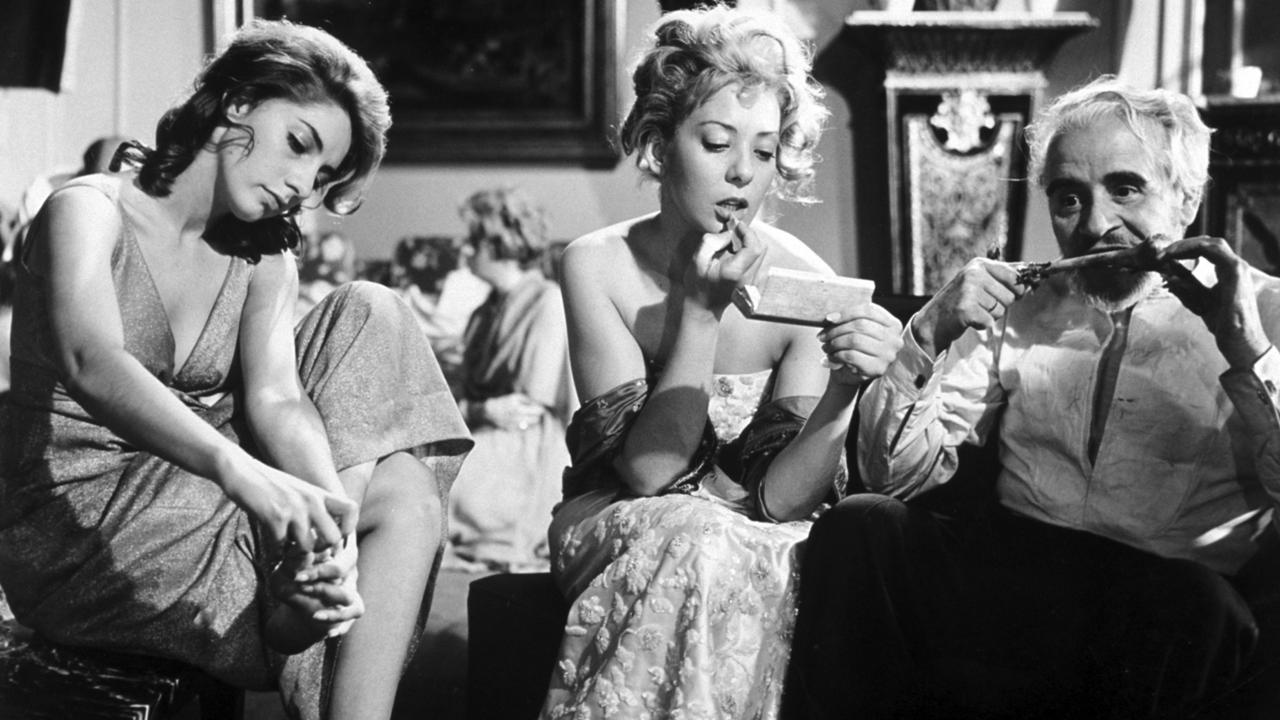
But The Exterminating Angel is something singular. There’s the satire element, showing supposedly refined upper class people falling to pieces the longer they are stuck in the same room with each other. And there’s the unnamed existential dread responsible for the chaos.

That element really keeps me coming back. There’s no explanation for why they stay, or why they’re eventually allowed to leave. Everyone just has this sense that something is wrong, and that there’s no way to move past the threshold of the room without inviting whatever terror lies beyond.

And so they carry on, knowing that what they’re experiencing is filthy, angry, and causing them to turn on each other at an increasing rate… but somehow they all believe that to leave the current terrible state would only lead to something worse.

It’s an element that makes this something much more than poking fun at aristocrats. Even though we may feel nothing in common with them on the surface, that nameless dread feels relatable. It doesn’t necessarily soften anything about our view of who these people are and the things they do to each other. But it reminds us that this isn’t as simple as a punishment for hubris. This isn’t some divine comeuppance.

We are all dancing on a thread, and should it snap, we all go down. The difference comes in how we fall.

43. Bonnie & Clyde

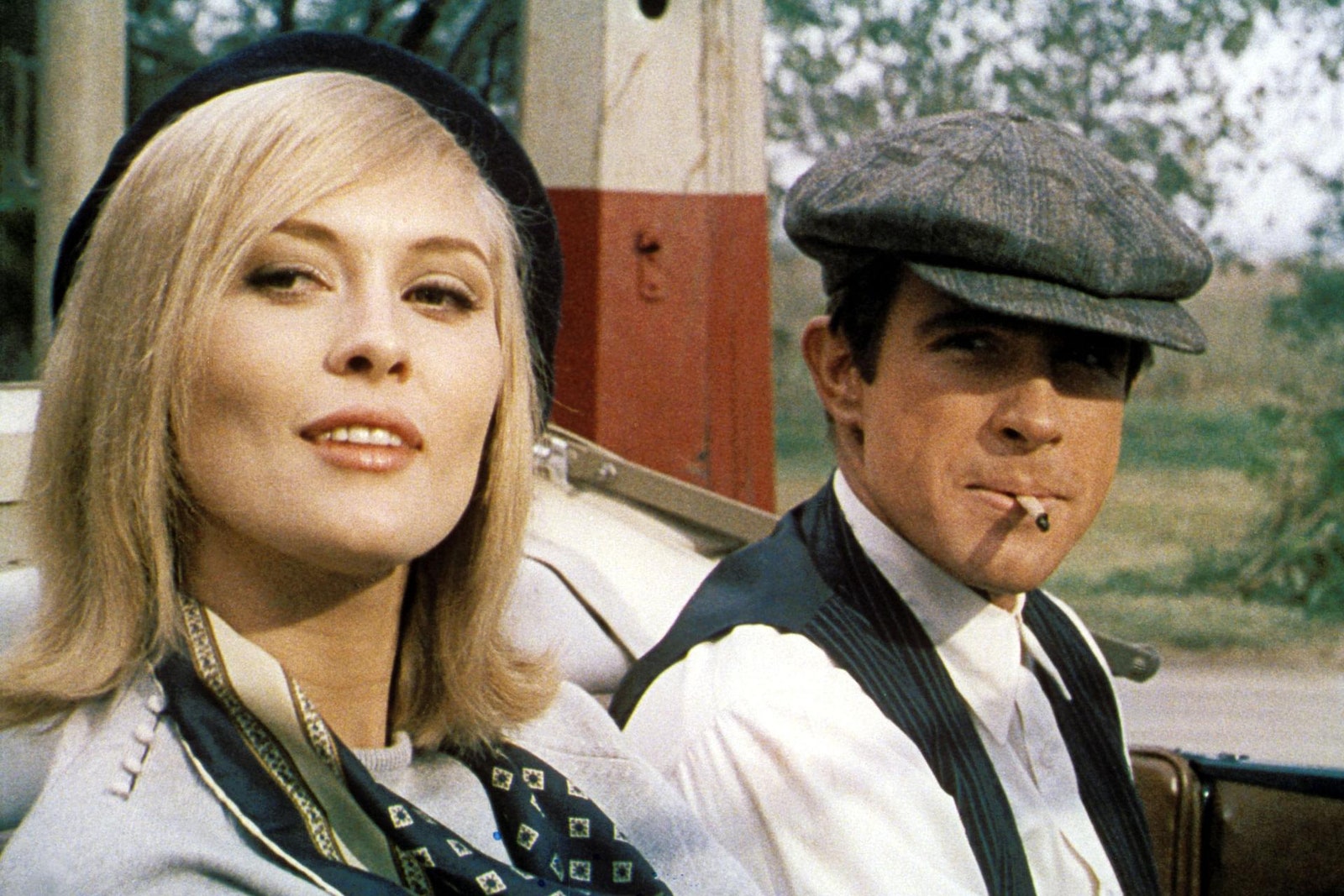
Faye Dunaway and Warren Beaty looking at the camera, seated in a car. From Bonnie & Clyde.

All you need for a movie is a gun and a girl.

–Jean-Luc Godard

He left out “a car.”

I might revise it to “All you need for a movie is two people who share an attraction, a way for them to get around, and a world that won’t stop until it tears them apart.” But that’s not nearly as pithy.

But the car is an essential part of this movie. It’s not just a getaway vehicle for criminal purposes, but a means of escape.

And it’s no coincidence that the end of their lives also involves the destruction of a car. Mobility cut short.

42. Rosemary’s Baby

Photograph of the empty frame where Rembrant's Christ in the Storm on the Sea of Galilee once hung in the Dutch Room of the Isabella Stewart Gardner Museum. A wood picture frame with nothing inside, revealing the green patterned wallpaper behind it.
Empty frame for Rembrant’s Christ in the Storm on the Sea of Galilee in the Dutch Room (photo credit: The Isabella Stewart Gardner Museum)

In 1990, two men dressed as police officers stole 13 works of art from the Isabella Stewart Gardner Museum. The crime remains unsolved, and one of the odd details was the haphazard violence of the theft, like how blades were used to slice canvases out of their frames.

Those frames still hang in the museum, letting visitors know this is where they would have been able to see a work of art. Where it should be visible and appreciated.

Chris, I thought this post was about Rosemary’s Baby?

Yeah. I’d love to talk about the impression that movie left on me. There’s a problem though:

Roman Polanski has made it impossible for me to talk about this movie with other people.

It’s a movie he made about a woman treated as a means and an object, whose body is used against her will as a vessel of evil by a conspiracy of people she knows and believes care about her complicit in this violation.

In the context of his past treatment of women and published comments about women (specifically and generally)… I’d rather not sing the praises of this movie.

It makes me think about those empty museum frames when I consider a work that needs to be discussed in the context of its primary author being a garbage human.

And Roman Polanski, for many reasons, is a festering trash pile of a man.

Rosemary’s Baby has left a mark on how I think about film, and what I think about as effective horror storytelling. So in that space in my mental museum, I leave the empty frame hanging.

41. Night of the Living Dead

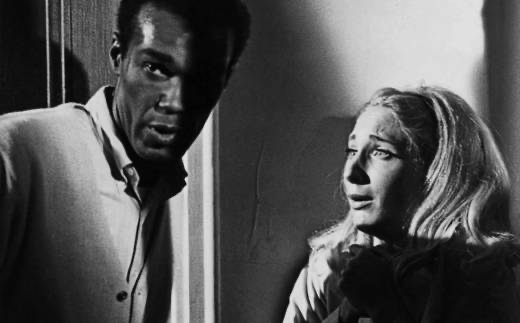
Still from Night of the Living Dead. A panicked Barbara looks at Ben, who stares out toward the camera, half his face in shadow.

Watching this film for the first time with my dad was a big moment. At first, I didn’t appreciate how unique this horror film was for featuring a black man as the lead. I wasn’t thinking about the social commentary being made by the way he takes control of the survival plan and the narrative itself. But then comes the film’s shocking ending and it was time for father and son to talk about the Civil Rights Movement of the 1960s.

This is a film made with the slimmest of shoestring budgets. And yet, this movie is the genesis point of so much of the zombie horror subgenre.

It has a lot to do with Duane Jones. His Ben survives a horde of zombies only to be slain in the final reel. As he emerges from the house he hid in through the night, a random deputized man with a rifle fires, ending his story.

In a contained space, for one night, a black man held tenuous power and influence, and took on the heroic role as all the white people around him crumbled from fear, prejudice, and ego. But none of that mattered when trying to carry his heroic self back out into the wider world, where agents of the law can’t (or can’t be bothered to) tell the difference between a black man and a supernatural threat.

Even if it may not have been Romero’s intent to include this subtext in the film, he ran with the idea in future films. It’s a trope of zombie films that the audience should understand that There’s An Allegory Going On.