12. The Third Man

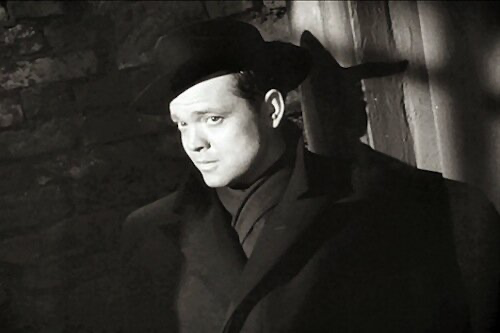
The Third Man. A light illuminates Harry Lime's face, and Orson Welles's smug, villainous mug makes its first appearance in this film.

I’ve written before about this as a movie that lit my fuse for writing, but every aspect of this film is top notch and holds up.

It’s a story about profiteering in the shadow of chaos and bloodshed. About the myths we tell ourselves about heroism (brought into play by having the protagonist be an American writer of pulp Western novels and thinking like one of his own heroes until he realizes it’s not that kind of story). There’s a curdled friendship and the question of whether loyalty is stronger than morality.

Not only does it have Orson Welles putting on a lobster bib to chew the scenery every time he’s on camera, but you also get some of Joseph Cotton’s finest work as a man out of his depth, chasing shadows in a foreign country.

And the ferris wheel monologue still cuts as deep as the first time I saw it. An amoral capitalist literally looks down on the little people from up high and makes it clear that their suffering doesn’t matter if it helps him make a buck. Compare:

Would you feel any pity if one of those dots stopped moving forever? If I offered you £20,000 for every dot that stopped – would you really, old man, tell me to keep my money? Or would you calculate how many dots you could afford to spare? Free of income tax, old man…free of income tax.

with a modern equivalent:

“The endgame is to allow things to drag on until union members start losing their apartments and losing their houses,” a studio executive told Deadline. Acknowledging the cold-as-ice approach, several other sources reiterated the statement. One insider called it “a cruel but necessary evil.”

Hollywood Studios’ WGA Strike Endgame Is To Let Writers Go Broke Before Resuming Talks In Fall

11. The Treasure of the Sierra Madre

The Treasure of the Sierra Madre. Humphrey Bogart, Tim Holt, and Walter Huston sit around a campfire to eat.

That moment when a plan for collective enrichment pivots to personal greed. When possible riches turn into actual wealth, the change happens. One third of a fortune doesn’t look as good as a whole fortune.

Also worth considering: relationship triangles.1 When you look at the dynamic between three characters, you can think about their relationship as forming a triangle based on how they feel about each other.

If all three characters have the same connection, it’s an equilateral triangle. If two are emotionally closer together (or their goals are more in sync) than the other one, it stretches that triangle with one point further away. And that distance can shift at any moment as you work with different pairings of characters and different interpersonal conflicts.

What shape is the triangle in now, and what shape will it be in after this scene? It’s a good mental visual for how character relationships motivate story choices (and vice versa).

  1. I picked this up from a class taught by Kim Costello at Boston University. A real brainworm of an idea that’s stuck with me. ↩︎

10. His Girl Friday

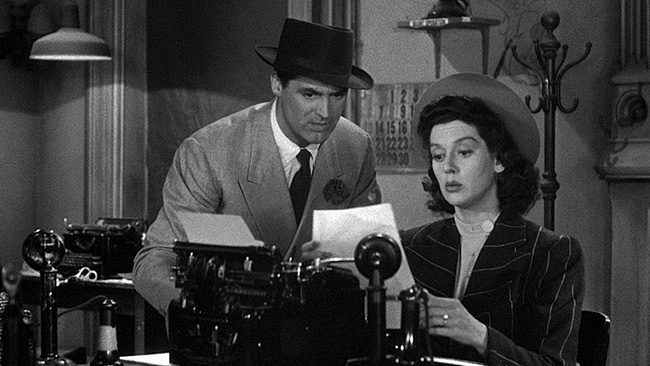
Still from His Girl Friday. Cary Grant reads over Rosalind Russell’s shoulder as she reviews a page from her typewriter.

It’s a 1940s movie where a man works to convince a woman not to leave her career and become a suburban housewife. That stands out on its own.

There’s also the element of adapting an existing play, but changing the gender of one of the main characters to create a new sense of tension and different relationships. Layer on top of that the way the story also plays with the popular Screwball Comedy setup of divorce and re-marriage.

It makes for a great lesson in adaptation, and how a work can stand on its own from the source material.

9. The Maltese Falcon

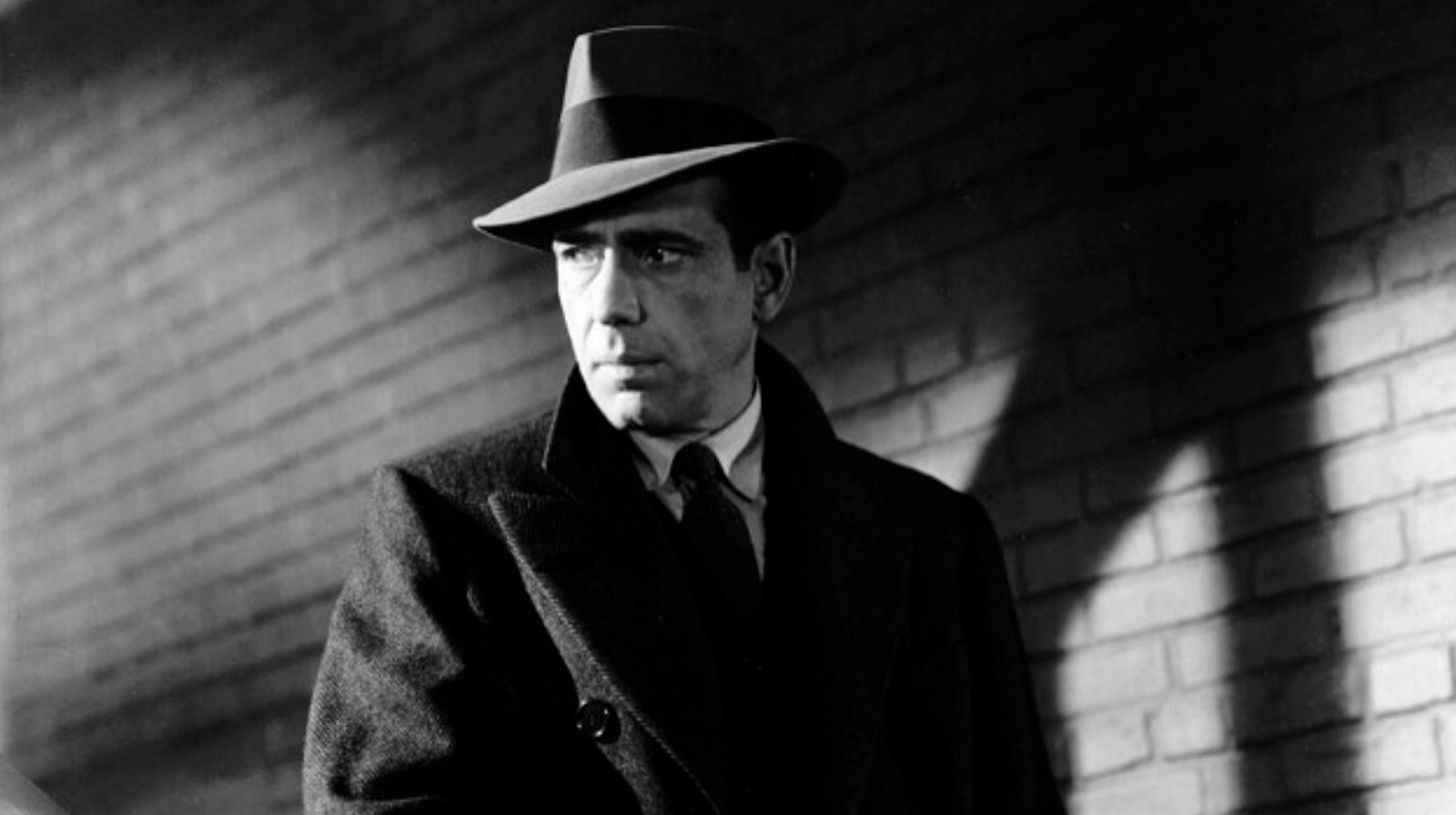
Humphrey Bogart in a fedora and trench-coat looking pensive in an alley. Lots of chiaroscuro lighting. This is film noir.

If there was one thing I watched growing up almost as much as sci-fi and horror films, it was film noir. Films noir? Gritty, cynical detective shit.

The Maltese Falcon has one of the best final lines in cinematic history. Chef’s kiss. No notes.

Bogart was part of my Unofficial Mood Board of Cool when I was a teenager. He mastered playing the type who looks like they give zero fucks, but actually cares about one thing so damned much that they’ll get in way over their head because of it.

It’s a story about chasing a Macguffin, and the pointlessness of greed. All the players are angling to get ahold of some little statue, and they’re willing to cross any line in order to get it. But the statue is mostly worthless. The only one who gets what they want out of it is Bogart’s Sam Spade, who finally understands why his partner was killed and gets some small measure of justice.


Noticing a theme in these early films in this series about the dangers of greed and ambition, and how the people who tend to suffer most are pawns in conflicts orchestrated from behind the scenes:

Is it a product of the era, an evergreen theme that’s in a lot of films, or something that particularly resonates with me because I was the one who wound up picking these films? All of the above?

I’m figuring this out as I go, and that’s part of the fun for me.

8. The Great Dictator

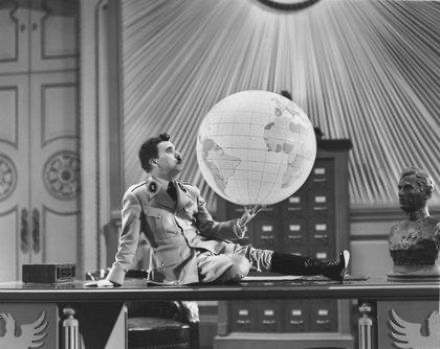
Charlie Chaplin as Adenoid Hynkel, sitting on his desk and balancing a globe on his hand.

The physical humor of Chaplin holds up. Each bit is a study in pacing, raising the stakes, and finding tension to drive the jokes.

There’s also the scene here where dictator Adenoid Hynkel dances with a balloon globe. Every movement is perfectly calibrated. Each shot lasts just long enough to keep you in the moment while still including cuts to perfect the arc of the globe from bounce to bounce.

But then comes the speech at the end, where Chaplin tears into fascism and warmongering, and the beating heart of this movie lies bare. Yes, it’s making fun of Hitler. But it’s doing so to show that the ideas of men like him shouldn’t be taken seriously.

The movie may be over 80 years old, but the playbook for demagogues hasn’t changed. Fascists are petty, small men who break their promises to those who lift them up: “Dictators free themselves but they enslave the people!”