4. The Wizard of Oz

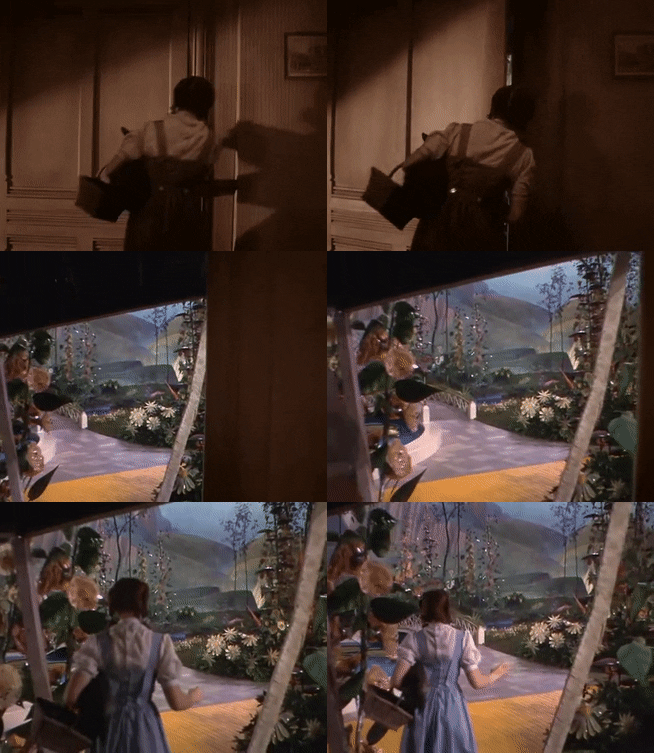
GIF from The Wizard of Oz with Dorothy opening the door of her home to reveal the Technicolor splendor of the Land of Oz.

This movie always amazed me on a technical level, even before I understood how a lot of it was done. That shock of seeing the colorful world revealed behind a sepia-toned door is one of the purest moments of movie magic I can think of.

In one shot, an impossible thing happens. A door opens up, but instead of seeing Kansas, the other side has shifted.

It’s a perfect metaphor for going to the movies. You begin in darkness, but then a familiar, recognizable space fades away as a new world opens up in front of you and invites you in. But just like Dorothy, we return home at the end of the journey.

But for a little while, we get to make new friends, see things from another perspective, and step outside of ourselves.

3. Bringing Up Baby

Cary Grant and Katharine Hepburn stare at each other, in close, while Grant clutches a box.

Sometimes it’s just fun to watch performers bounce off each other. Cary Grant and Katharine Hepburn could make reciting dictionary definitions entertaining and combative, but when they have this script to work from?

I wonder what kind of influence seeing so much screwball comedy at a young age had on my ideas about romantic love. Bantering isn’t the same as bickering, and animosity doesn’t mean affection. Opposites can attract, but we never get to see how long their differences balance each other out once the external conflict resolves.

Then again, it also gave me expectations for a partnership of equals. Power dynamics where someone’s love wasn’t a prize to be won, but something that builds upon your time together and the complications you work through together.

2. Mr. Smith Goes to Washington

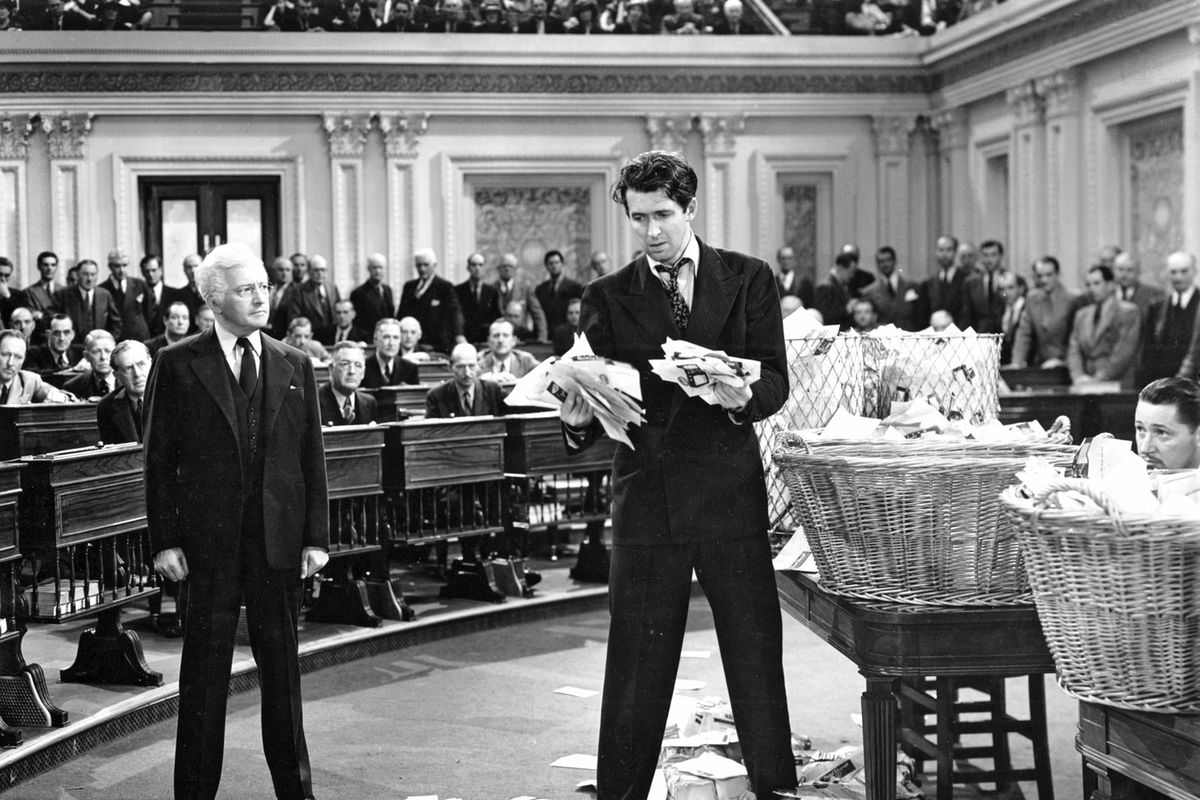
Still from Mr. Smith Goes to Washington. Claude Raines watches an incredulous James Stewart pulling letters from baskets on the Senate floor.

If I hadn’t seen this many, many times as a child, I never would’ve tuned in for The West Wing.

It presents an ideal instead of reality: Even in the best of conditions, corruption will take root, but honesty will triumph.

Imagining this story now, I can see the competing clickbait headlines: “Senator Smith OBLITERATES Taylor Machine on the Senate Floor” vs. “UNHINGED Smith Dams up Senate with Filibuster”

But Jimmy Stewart can almost make you believe. A powerful performance.

1. Frankenstein

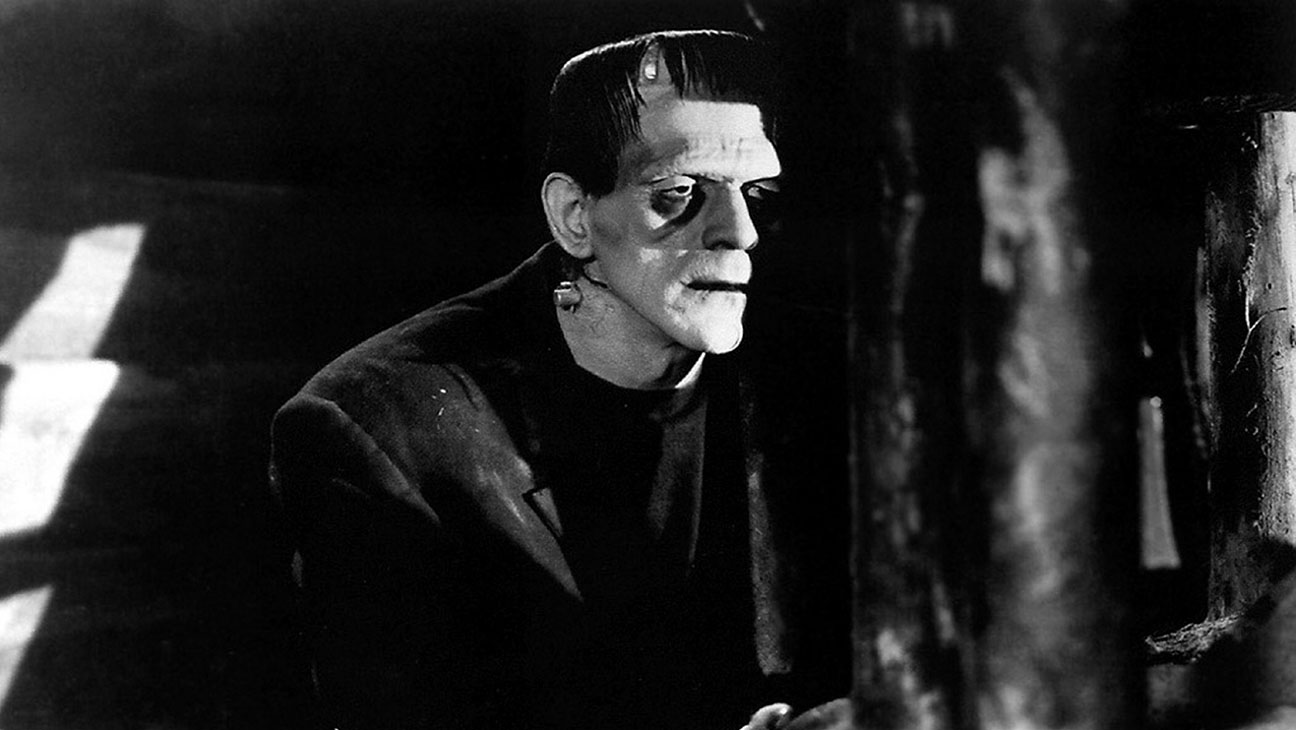
Frankenstein watches from the shadows.

We had plenty of black & white films in our VHS collection when I was younger. I was introduced to Frankenstein and the other Universal Monsters early on. It may be why I like my horror more atmospheric and creepy than violent and gory.

Sure, these can seem cheap and hokey (especially when you get into the sequels, and moments where Abbott and Costello get involved), but there’s genuine menace and emotion in the originals. While Dr. Frankenstein acts as a shorthand for the feared overreach of science, Frankenstein’s monster offers a point of identification for anyone who feels mistreated for simply being who they are when who they are seems different.

Protecting Your Attention

Your attention is one of the most valuable things you possess, which is why everyone wants to steal it from you. First you must protect it, and then you must point it in the right direction.

Austin Kleon, Keep Going

Working on a newsletter a few weeks back, I came across a paper on Critical Ignoring as a required skill for digital information literacy.

Critical ignoring is a type of deliberate ignorance used to filter and block information so a person can reduce their exposure to irrelevant or inaccurate information. It involves redesigning the choice architecture used to engage with the internet, using outside references to validate the quality of information by a source (instead of looking only at the source itself), and disengaging from bad actors.

Why work on intentionally ignoring information? Cited in the paper:

When the world comes to people filtered through digital devices, there is no longer a need to decide what information to seek. Instead, the relentless stream of information has turned human attention into a scarce resource to be seized and exploited by advertisers and content providers. Investing effortful and conscious critical thinking in sources that should have been ignored in the first place means that one’s attention has already been expropriated.

M. Caulfield, Recalibrating our approach to misinformation.

There aren’t any easy answers to how to avoid falling down useless rabbit holes on the internet, especially when lead down them by emotional manipulation. But this paper does connect with a lot of other best practices and puts into focus the idea that the goal shouldn’t be to optimize your information consumption, but to make choices that support the things you already want to do so that you can avoid being redirected from what you value.