The Studio Ghibli 5K

From The Secret World of Arrietty. Tiny Arriety looks ahead with a determined face, standing in front of a patch of yellow and white flowers.

Sprout participated in the Girls on the Run program this school year, but they weren’t able to attend the 5K run at the end of the season.

I proposed that we do a 5K by ourselves, and as a reward for finishing it, treat ourselves to The Secret World of Arrietty in an actual theater (thank you Studio Ghibli Fest).

The Running Part

There was a time when Sprout would want to take a break after just starting to run. This is not that time.

We set ourselves a simple rule: Each time we pass a fire hydrant, we would switch between running or walking. Our goal was just to finish a 5K distance. The stretch goal was besting their time from the practice 5K (an hour and eight minutes).

We finished the 5K in 53 minutes. I’m proud of them. They’re proud of themself. And we both felt a big ol’ rush of endorphins for the rest of the day.

I knew something was going well with this program when they asked me one day, “Can I just go run around the block?” When they got back, they asked: “Can I do that again?”

The energy, the focus, the commitment. These are all things Sprout strengthened in the last few months.

There was another moment today that impressed me, too. Sprout tripped and took a tumble, landing on their knee and hand. It was a pretty hard (and loud) fall. But they took some time with me to assess how bad it actually was, calmed down, got back up, and said they wanted to keep going.

I didn’t need to push. They had a goal to finish this 5K and they wanted it badly enough that a fall that just weeks ago would’ve meant a piggyback ride home now was a minor obstacle.

Again, so damn proud.

The Movie Part

I knew this would be a movie Sprout would want to see. It’s their favorite Studio Ghibli movie so far. We’ve both only seen it on our TV at home.

I am a person who believes in the cinematic experience. Going into a dark room with a bunch of strangers and all staring at the same bright screen has for a long time felt holy to me. It’s a sacred space, and there are many films that are best seen in that context.

The Secret World of Arrietty is absolutely one of those films.

At one point, Sprout leaned over and mentioned how amazing the sound was, and we talked later about how it was both the quality of the sound system in the theater and the sound design of the film itself (like how the same objects would make different sounds depending on whether we were experiencing the moment in the POV of the Borrowers or the “Human Beans”).

We both knew this was a gorgeous film, but seeing it up on a giant screen really let all the details pop. You could see the care put in to every shot.

I loved being able to share this day with my kiddo.

It also makes me hopeful that the slop-fest of current AI/LLMs will pass (or at least the hype will clear away for less flashy, human-centered tools that could actually work as promised). You don’t get storytelling like this movie by plugging in some prompts to a plagiarism generator and waiting for it to render. You can’t fake this emotion.

The Secret World of Arrietty. Arrietty holds Sho's finger and cries as she tells him goodbye forever.
We saw the subtitled version in the theater, and the final lines from Sho were different than in the English dub. The English dub has this beautiful line, “Arrietty, my heart is strong now because you’re in it.” The subtitled version had a similar sentiment but lacked the poetry.

I don’t want this AI

Nobody listened to Dr. Ian Malcolm and this is where we are now.

I don’t want an AI to create uncanny valley renderings for fan casts of film remakes.

I would love an AI I can train to prune my phone’s photo library so that I can quickly find the best shots to share after a day out with my kids.

I don’t want an AI to generate SEO optimized content so I don’t have to write something.

I would love an AI that helped me sort my RSS feeds for the most important things for me to read, so I could more quickly collect ideas for response posts or newsletter links.

I don’t want a plagiarizing Ouroboros that tries to mimic human creativity, but ends up generating mediocre recycled snake shit.

I would like an AI that could analyze my ideas and show me comps, or suggest that there’s more work I need to do to craft something unique.

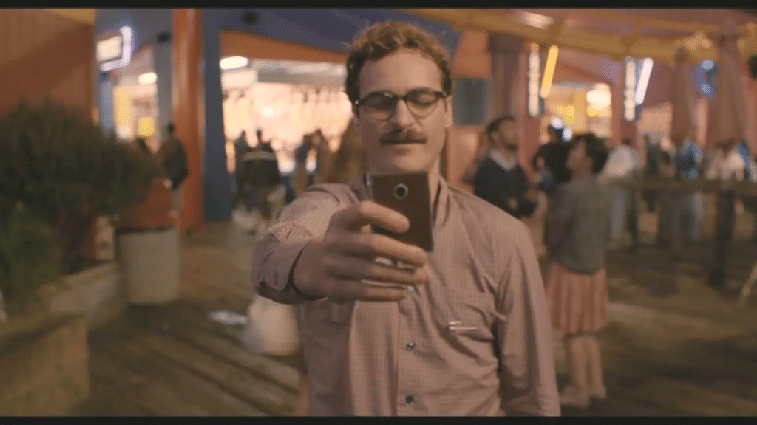
I do not need a flirty AI digital assistant programmed by people who continue to miss the point of the science fiction classic “Don’t Create the Torment Nexus.”

I would love it if the people working on applications of AI would appreciate human imagination, craft, and connections instead of thinking there’s a need for a “better” simulation of those things.

Roger Corman dies at 98

The Variety article gives a fairly good summary, but this one feels personal.

Let’s start with Targets, a film I always talk up. It’s Peter Bogdanovich’s first film that happened because Corman had some unused footage with Jack Nicholson and Boris Karloff, and Karloff still owed him a few days of shooting for a contract. Corman told Bogdanovich if he could work those two things in, he could make a picture.

There’s also the careers he helped start or rejuvenate:

After “Little Shop of Horrors” in 1960, Corman convinced Arkoff to bankroll some more ambitious projects, in particular, a series of films based on the works of one of Corman’s favorite authors, Edgar Allan Poe. The horror series, which starting with “The Fall of the House of Usher” in 1960, spawned eight low-budget hits including “The Tomb of Ligeia” and “The Masque of Red Death.” They revived the careers of Boris Karloff, Vincent Price, Basil Rathbone and Peter Lorre and became classics of a kind.

During the same period he was giving unknown actors like Ellen Burstyn, Nicholson and De Niro, screenwriters like Robert Towne and directors like Scorsese, Demme, Joe Dante and Peter Bogdanovich their starts.

– Variety obituary (emphasis mine)

And he produced plenty of movies I watched during my MST3K/renting horror movies with friends era. I can still quote parts of Death Race 2000.

I don’t think there’s a world where I love movies as much as I do without Roger Corman.

Digging things up in therapy

Jurassic Park: Dr. Grant leans in close and scares the shit out of the smartass kid at the dig site who thinks velociraptor looks like a turkey.
“Now you may think Fear of Abandonment sounds like a little baby problem that’s easy to get over. Until it slashes at you here. Or here. Or maybe here, where it makes you retreat from your existing friends into isolation.”

The best way to describe last few weeks of meetings with my therapist is something like this: I feel like a paleontologist who keeps finding interesting fossils, but none of them fit together.

“This one is a leg bone, but it doesn’t belong with any of these feet, and the feet don’t belong with this neck. And there’s just a pile of skulls over there and none of them make any sense.”

I’m doing the work, but the work’s not cohering into anything clear at this point.

And I just keep digging, and hoping I can start making some connections soon.

Re: Be quick to praise, but slow to criticize

Full disclosure: I have listened to I Can Do It With a Broken Heart a great many times already.

I was thinking about this over the past week as The Internet dealt with a new album from Taylor Swift. It came out while I was sleeping Thursday night and by the time I woke up Friday morning The Internet was raft with exceptionally strong opinions already. Just over a week later and the internet now has a number of, “actually, there’s more here than I initially thought,” articles coming out.

—Matt Birchler, Be quick to praise, but slow to criticize

I can think of a few times I felt this same kind of vibe.

The first was when we screened Breaking the Waves in my Intro to Film class in undergrad. Having just learned about the Dogme ’95 school, I spent a lot of effort grousing about how the film didn’t even fit the rules it claimed to be about. But the next semester, I watched and re-watched the film because it got such a strong reaction out of me. And eventually I stopped seeing how it wasn’t what I expected and started digging in to what was actually there.

I was late to the party with The Big Lebowski. After I watched it for the first time on DVD my reaction was little more than, “huh.”

So as soon as the menu came back up, I pressed play again. And it was that second viewing, where I knew more about what it was and could pay less attention to what I had learned second-hand about it where I started to find all the parts I enjoyed.

For the most part, if I didn’t like something I need to figure out why before I’ll speak to it. Part of that comes from spending so many years in writing workshops for school: You aren’t helping if you’re just pointing out flaws instead of working to understand choices. And there’s a healthy helping of being curious instead of judgmental.

I think Birchler picks a great example for this tension. Swift is an outsized force of entertainment, so lots of people are jockeying to get their reaction in first (or more likely in the first 10%). And those calculations aren’t just about reviewing the music itself, but about getting attention to the review.

That’s one of the reasons why my list of no-skip albums features stuff from the past that holds up.

If we want to serve capitalism, we rush to evaluate things as product and weigh its value to a consumer as a purchase. If we want to understand our connection to the work and let the art serve us, that takes time.