The Enthusiastic Web vs. The Desperate Web

There’s a Northern Exposure episode guide somebody made back in the early days of the web, and it’s still up.

It reminds me of the days when my friends and I would pull up the Springfield Nuclear Power Plant to read lengthy text files breaking down all the references and gags in episodes of The Simpsons.

We knew a web that was full of enthusiastic people sharing the things that excited them.

And that’s still there! I’m not about to say there aren’t plenty of cool people putting out great stuff on the internet.

But there’s also a lot of desperation.

I’m thinking about every local news site I see with ads disguised as articles telling you How to Watch this TV show. Or when you search for tips on how to do a task on your computer and find that the first few how-to sites are longform ads for a specific app.

Yeah, I feel like an old man yelling at a cloud when I type this all out.

When I think about the metrics people and companies shoot for with what they post on the web, there’s a hunger for clicks. This isn’t new.

But when people put out into the world things that they’re passionate about, and that they genuinely feel a connection to and a desire to share? I just think that’s neat.

And I hope that when you see it out there, you notice it.

Re: Places on the web by Manuel Moreale

And then there’re personal sites, the house in the forest. It’s the place people escape to when they’re tired of the noise. However personal sites are not isolated islands. They interact and stay connected, using links, mentions, emails, and RSS. It’s a part of the web that moves at a slower pace and that’s a feature, not a bug.

Places on the web

This post was a great reminder that sometimes I try to speed up this blog, and it goes against what it’s really built for. Social media is busy, chaotic, and has a need for continuously feeding it content, because everything fades away in hours or minutes.

But this is something that I’ve built over years, and it’s still here. Inconsistent, still pretty rough around the edges, but it’s not going anywhere.

I do plan to return to the 365 films series, but not trying to make it a daily race.

Having your own little home on the internet may not give you the potential reach or resources of some platforms, but I know who writes this blog. I don’t put anything up here that I don’t believe in at that moment. And I don’t allow Nazis or TERFs into my house.

48. The Graduate

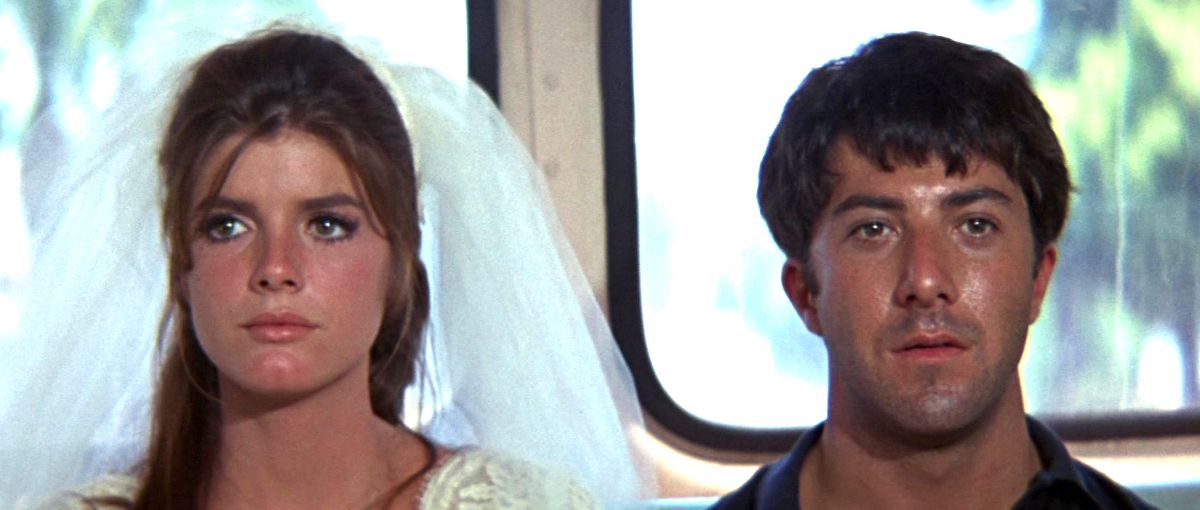
Elaine and Ben sit on the bus at the end of The Graduate, staring straight ahead. Elaine in the wedding dress she was wearing as she ran out of the ceremony.

To know what you don’t want to be is not the same as knowing who you are. Ben is presented with so many versions of what he could be, and none of them pass the sniff test for him.

Ben and Mrs. Robinson are both using each other to feel like they aren’t living on a track. He wants to believe he can just float through without having to make real choices. She wants to feel a sense of control and desirability. It’s nothing ventured, nothing gained. So long as everything between them stays on the down low, nobody needs to give up anything, but nobody gets anything honest or solid, either.

Ben’s shift of his attention from Mrs. Robinson to her daughter signals a desire for something more solid, but without seeing Elaine as an individual. She’s a cypher to him. A socially acceptable version of her mother that he can appear in public with. He pursues the idea of her, but never the reality. It’s not a love story.

We end on this shot of two exhausted young adults realizing that actions have consequences and they don’t know what to do next. They didn’t think any further than escape. Even their means of escape, a bus, is just another example of the thing they were trying to escape: Stuck together with other people, all going the same way, following a repetitive route established by others who came before them.

47. Breathless

A stolen car. A revolver. A man running through a field.

In quick cuts, we get the bare essentials of a story about a fugitive.

Just as much as the movie is talked about and taught as being an example of disruptive editing, there are also long scenes of dialogue with few cuts. Hangout scenes.

It’s a film that takes me back to Introduction to Cinema 236, and having the professor take us back in time to show the origin of so many techniques we take for granted.

It reminds me of watching a rented copy on my laptop a few semesters later with someone I had an ecstatic crush on, but trying to play it ever so cool and close to my chest because I was under the impression this was something I should do. Also (like me) she was the kind of person who was genuinely interested in watching the complete movie without distracting each other.

And it’s something I return to from time to time. Less because the filmmaking itself sparked something in me, but because it’s a talisman from that time. Like touching this object connects me back to that person I was and those feelings I felt.

I think about the moment Jean-Paul Belmondo looks at a picture of Humphrey Bogart and tries to copy him. The way that Bogart was this character’s conduit toward being cool. That there was something he wanted for himself that he thought could come through this indirect interaction with an icon.

That moment of not quite knowing yourself, but finding a model. The act of copying someone else in an attempt to see if you have something similar to what they have inside you as well.

And that feeling, maybe more than most, explains who I was in undergrad. Someone trying on personas. Tamping down the earnest expressions of self to try to be like other people who seemed like they had things figured out, and missing out on the realization that the one thing they actually had figured out was how to be themselves.

Bring it back around, and there I am watching Michel Poiccard end up losing everything because he got caught up in some cool, tough guy fantasy of who he was supposed to be.

Maybe when we work so hard to keep ourselves from getting hurt by others, we make it easier to hurt ourselves.
46. The Great Escape

Who says overlong action movies are a modern invention?

But this one has Steve McQueen on a damn motorcycle doing his best to escape from Nazis.

It’s a movie that’s not afraid to have its heroes lose, and lose big.

The defiance was the point. The refusal to yield was goal enough.