16. Heaven Knows, Mr. Allison

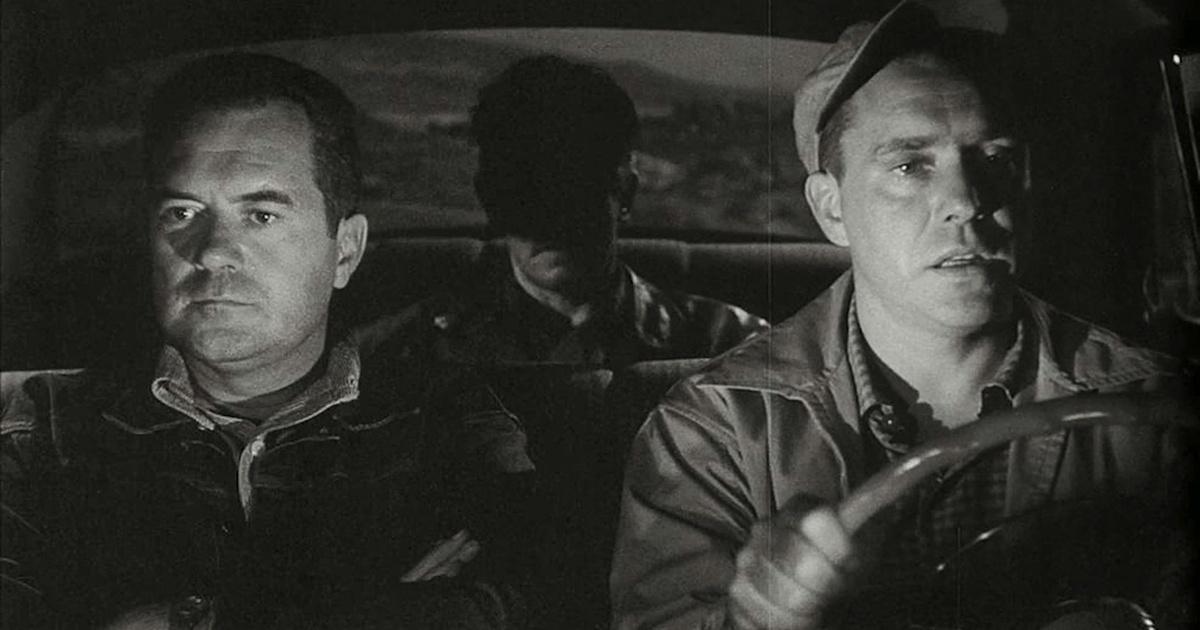
Still from Heaven Knows, Mr. Allison. Deborah Kerr watches Robert Mitchum, standing in front of the trees on an isolated Pacific island.

A stranded US sailor and a novice nun (who has yet to take her final vows) need to evade capture on an island in the South Pacific controlled by the Japanese army.

It’s got action. It’s got suspense. It’s got a novice nun who does not wind up renouncing her vows even though she had plenty of time alone with a heroic hottie.

This movie is so focused on these two characters, it has plenty of opportunities to play with the tension between them. Romantic tension. Tension over values. Tension over determining how best to care for each other when the need arises.

That relationship Sister Angela and Corporal Allison feels nuanced and thoughtful. While not nearly as dialogue-heavy, I see connective tissue with a two-hander like Before Sunrise. Two deeply felt, dimensional characters, shoved together in a way that allows each of them to learn about each other, and themselves.

15. Casablanca

Still from Casablanca. Ingrid Bergman stares at Humphrey Bogart on a foggy airport runway.
Find someone who looks at you the way Ingrid Bergman looks at Bogart.

There’s a Roger Ebert commentary track for this film that ranks among my absolute favorite commentary tracks and lessons on film. One part that sticks out was his encouragement to watch Ingrid Bergman’s eyes, and the way that she never just sets a point on Bogart’s face. Even if she looks perfectly still, her eyes are moving, mapping him, reacting and searching for something.

I’m slowly reading a book about the making of the film, and as much as I’m getting about the particulars of this film, it’s also saying a lot about the studio system at that time. Warner Brothers was an assembly line in many ways, including how directors were assigned their crew leads without consultation (based on who on the payroll was available to shoot).

But even out of that “we’re just making widgets” mentality, they produced something like this. It’s a little bit luck, and a little bit proof of the idea that you get a better creative product producing for quantity than aiming at perfection with everything.

Yet it was also a very different time, where a film was a discrete thing to be sold. You wanted to watch it, you had to buy a ticket, and only for a limited time. You couldn’t own it. You couldn’t watch it at home. You weren’t buying a season pass to a particular theater figuring that even if you don’t watch everything or go every week, your subscription will be worth it.

Film is art. Film is commerce. Both these things can be true. And there are occasions where a film succeeds in both ways. Here’s one of those moments. But it’s not just the artistry of any one person, but the impact of all these players brought together, just so.

The background players and supporting cast are a huge part of that, too. A lot of them were European refugees who fled from the Nazis. Marcel Dalio, a Jewish actor who fled Paris in 1940, was in The Rules of the Game. S.Z. “Cuddles” Sakall (a personal favorite character actor of mine growing up) had family who died in death camps.

Their lived experience brought something to this film that can only come from real flesh-and-blood people with their passions, their fears, and their history informing their moments in front of the camera. The plane that Ilsa and Lazlo get on may be made of cardboard, but the emotions and the people in Casablanca feel as real as it gets.

14. Double Indemnity

Scenes like this one show that connective tissue between screwball comedy and film noir. It’s banter. It’s flirtatious. But there’s a harder edge.

I could generalize it as screwball comedy is when neither side wants to admit there’s an attraction, but it ends up that love is the thing they want the most. Film noir is where there’s an obvious attraction but at least one side wants something else more than the relationship.

I have a deep appreciation for the aggressive use of subtext here. It dances around the real subject in a way that’s both obvious and offers deniability. And the way it extends the metaphor to the breaking point? Chef’s kiss.

13. Citizen Kane

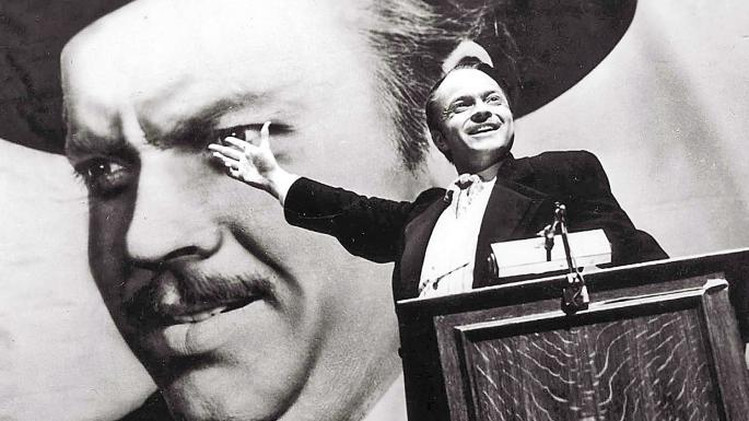
Orson Welles in Citizen Kane, standing at the podium for a campaign rally in front of a giant poster of his own face.

Nobody could oversell this movie. There are plenty of reasons it stands the test of time and remains one of the greatest films ever made.

It’s overlapping narrative structure. The groundbreaking camerawork. The dialogue. It’s a work where everyone involved left nothing on the field.

It’s a story about the limits of power. Even a man with the ability to goad a nation to war or produce a media empire cannot convince people to love him. He moves fast and breaks things for his entire life, but in the end he’s left with nothing but broken pieces.

It’s A Christmas Carol without ghostly intervention.

12. The Third Man

The Third Man. A light illuminates Harry Lime's face, and Orson Welles's smug, villainous mug makes its first appearance in this film.

I’ve written before about this as a movie that lit my fuse for writing, but every aspect of this film is top notch and holds up.

It’s a story about profiteering in the shadow of chaos and bloodshed. About the myths we tell ourselves about heroism (brought into play by having the protagonist be an American writer of pulp Western novels and thinking like one of his own heroes until he realizes it’s not that kind of story). There’s a curdled friendship and the question of whether loyalty is stronger than morality.

Not only does it have Orson Welles putting on a lobster bib to chew the scenery every time he’s on camera, but you also get some of Joseph Cotton’s finest work as a man out of his depth, chasing shadows in a foreign country.

And the ferris wheel monologue still cuts as deep as the first time I saw it. An amoral capitalist literally looks down on the little people from up high and makes it clear that their suffering doesn’t matter if it helps him make a buck. Compare:

Would you feel any pity if one of those dots stopped moving forever? If I offered you £20,000 for every dot that stopped – would you really, old man, tell me to keep my money? Or would you calculate how many dots you could afford to spare? Free of income tax, old man…free of income tax.

with a modern equivalent:

“The endgame is to allow things to drag on until union members start losing their apartments and losing their houses,” a studio executive told Deadline. Acknowledging the cold-as-ice approach, several other sources reiterated the statement. One insider called it “a cruel but necessary evil.”

Hollywood Studios’ WGA Strike Endgame Is To Let Writers Go Broke Before Resuming Talks In Fall