I shared a link to 11 Foot 8 Videos (The Can Opener Bridge) in last week’s newsletter. The site holds years worth of videos of a notorious train bridge in the creator’s town. A camera waits patiently, pointed at the intersection until a truck ignores the height warning and attempts to drive through. There’s a lot to appreciate about this site:
A reminder that no matter how clearly you post a sign, some people will ignore it.
When a person gets stuck under a bridge, their problem is just starting.
There’s always a way to make a mistake worse.
Car crashes are attention-grabbing, but this particular type has the added benefit of allowing you to enjoy the spectacle knowing that people aren’t actually getting horribly injured or killed.
When I was four, I thought I would grow up to be a paleontologist. My preschool teachers were impressed I knew the word. My parents patiently bought me books on dinosaurs and sat through hours of regurgitating dinosaur facts at them. Everybody took it at face value that This Was What I Was All About. I saw this not just as a job I could do, but where I could see myself fitting in. This was the kind of person I was and what I should do.
I did not grow up to be a paleontologist. But that wasn’t important then. It hadn’t happened yet. I honestly believed my future was going to be spent assembling fossilized skeletons like giant, expensive lego sets.
I had a window of understanding into who I was and what I was about. That window grew as I got older, and I started accepting or rejecting different aspects of who I saw myself to be.
Part of growing up means embracing and exploring different identities.
So if you wouldn’t knee-jerk react to a kid with “You’re never going to be a paleontologist when you grow up,” why is it okay to tell them “You don’t actually know you’re nonbinary/trans?”
Whether or not it’s “a phase” isn’t for other people to say. In a way, everything we see about ourselves is just a temporary phase, but some of those phases last for a long time. Even the discarded self-perceptions have value—They help move us forward in our understanding of who we are.
Listening to what Sprout has to say about themselves is bigger than a conversation about gender. It’s about showing them we take them seriously. We trust them to come to us when they have Big Things to talk about. We love them unconditionally and there’s nothing they can say or think or feel that will change that.
Because no matter how either of our children identify now or in the future, the one constant we want them both to feel is that they are loved, exactly as they are in this and every moment.
Really enjoying the new album from The National (this isn’t surprising).
There are guest appearances from Sufjan Stevens, Phoebe Bridgers, and Taylor Swift, so this is the closest I will ever probably get to an album they all recorded together after spending a few months in an isolated cabin.
It’s not like they’ve transitioned to funeral dirges or lost the energy in their music, but I’m thinking about the difference between songs like Abel and Tropic Morning News. It’s not really a mellowing of a band or the emotions behind the songs, but creating a different vibe. Songs that are less for screaming along to with the windows down and more for vibing to while on a long drive.
Because no matter what, a car is the best place to listen to a rock album. I don’t make the rules.
I haven’t written much here about parenting a non-binary child. Part of that is the urge to roll out a long, all-encompassing post.
So instead of letting that stay a mental block, let me get the ball rolling with one recent anecdote.
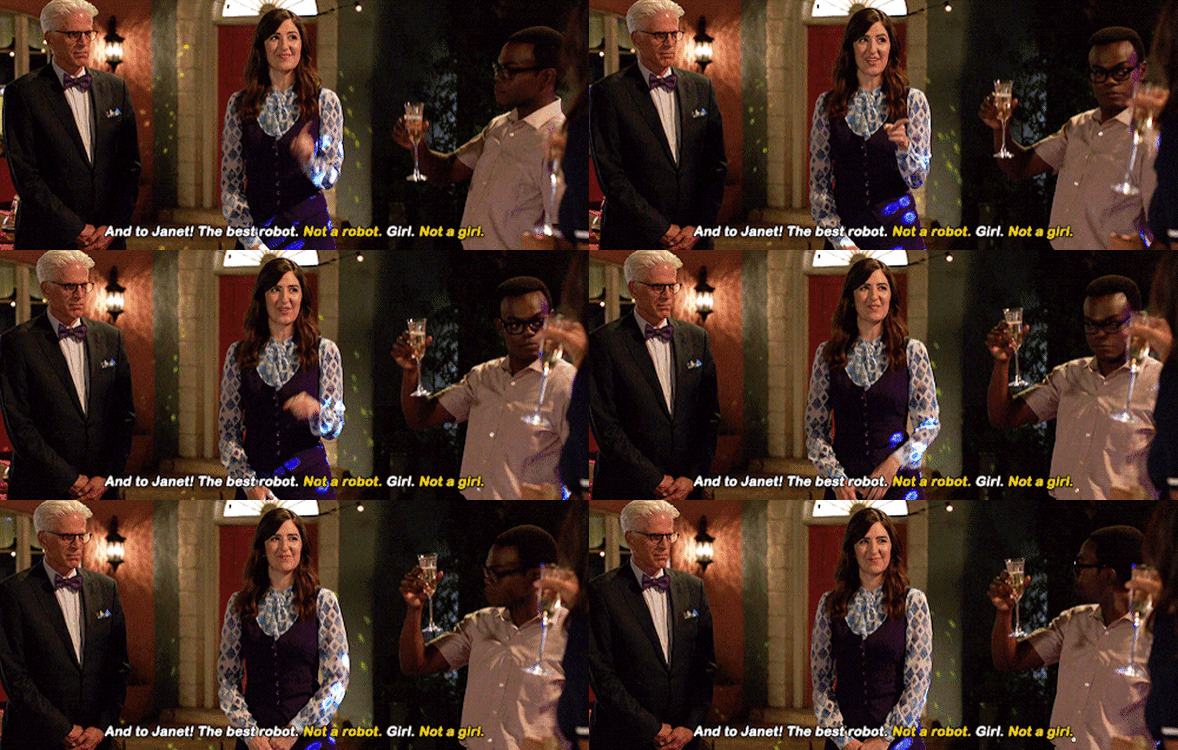
Sprout went over to their gym teacher (with some backup from their BFF) and said that it makes them uncomfortable when the class gets divided into boys and girls to make teams or for different activities. Sprout wanted to make sure the teacher knew that they weren’t a boy or a girl, and dividing the class this way made it so they couldn’t fit in.
The gym teacher listened, and a compromise was made that Sprout would get to choose which group they did activities with each class.
I’m always proud when Sprout acts as their own advocate, but standing up to a teacher? That’s a bold move.
And right now, while they’re still young, the compromises and accommodations will be this easy.
A friend brought up the prospect of what’s going to happen once we get to middle school and locker rooms become part of the conversation. I said I wasn’t mentally prepared to think that far ahead.
But I know a few things about Sprout already. When they first shared their nonbinary identity with their mom and me, they said “I don’t feel like a girl or a boy. I don’t know if this is how I’ll always feel, but it’s how I feel right now.” We took them at their word, and continue to do so.
But I do know that they saw us as trusted people who they could come to with big, important things. And in seeing how they’ve approached sharing this identity and taking ownership of it, I know they have a lot of inner strength.
The potential problems they may have down the road could be completely different than anything we’re thinking about now, so why spend the energy on those fears?
Right now we have a child we love, who feels safe and respected with us, and who feels confident and proud of who they are. That’s where the focus needs to stay at the moment. That’s enough.
 This Builds Character
You must be logged in to post a comment.