The Be Here Now Box

Last semester I chose to take a stand on student phone use in class.

I wasn’t just getting the occasional person doing a bad job hiding that they were texting in the middle of class. People would take out their phones multiple times during an hour-long lecture. People would keep earbuds in. People in the front row would sit staring at their phones for extended periods, right in front of me.

Talk to any educator and you’ll get plenty of kids-these-days gripes on the subject (as if kids always paid 100% attention to classes before phones). But phones do present a particular, difficult problem.

Teaching at a university instead of at a high school or middle school, I didn’t want to use an authoritarian demand for phones to stay out of the classroom with draconian penalties would only make students work slightly harder to hide phone use, and would force me to distract myself from teaching to enforce it.

I had to think about the underlying problem. If this were just about making sure I had all eyes on me for the entire lecture, it would feel like an ego problem, and it would be easier to deal with that by adjusting my expectations and taking some time for self reflexion. I could solve that problem more easily than convincing a room full of adults to stop touching their phones.

But looking at the work my students turned in, I saw there was a different reason to question their phone use: focus. With so many students getting marked down on their assignments for unforced errors that showed they weren’t focusing, I had a larger beast to slay than students not paying attention in class.

They weren’t paying attention to what they were doing, full stop.

Whatever solution I proposed had to be voluntary (so I could avoid the enforcement problem). It had to be persuasive. It had to use social pressure.

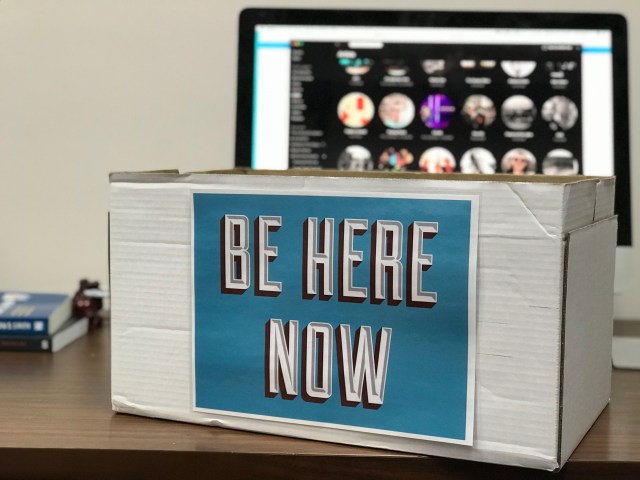
That’s when I came up with THE BE HERE NOW BOX.

FullSizeRender.jpg

The best part about having a box is that you’ve got a physical prop. Something to hold up and point to. A novel object that draws attention.

I made my pitch: This isn’t about me — It’s about you. You’re not getting the class you’re paying for if you don’t pay attention. You’re giving up control of your attention by letting something distracting sit within arm’s reach for this hour. You may think that it doesn’t effect your attention, but studies show that multi-tasking not only reduces willpower but cognitive performance.

Being next to your phone distracts you, and you won’t even perceive any change in your attentiveness or mental ability.

So, if they were able; if they didn’t have any pending obligation or potential emergency that might require them to take immediate action, I asked them to make a choice: To take control of their attention and put their phone in the box. Make one decision this hour instead of having to make the choice to ignore your phone over and over throughout the hour.

It worked. Sort of.

Some classes participated more than others. The classes that needed it the most were also the most reluctant. But I saw an overall increase in participation, and the class that put the most phones in the box had the highest grades.

Anecdotal? Sure. It definitely wasn’t a controlled study. But it happened.

But that was last semester.

I knew I wanted to bring the box back for the new semester, but I wanted to refine my pitch. I figured if there was a way to pitch it more effectively, I could get more people to try it out. If I could find a better argument, better facts, or a more persuasive opening statement…

If I could do a better job, maybe more people would give it a shot.

But what did it actually mean to do a better job? How was I measuring success? More students putting aside their phones? More consistency from the students who initially tried it out? Students telling me they made their own box at home? Better student performance on assignments, showing an increase in mindful attention?

What was a win?

I was stuck, so I decided to try blogging about it to see if I could generate a better sense of what I wanted to say. But that pointed my attention to another problem.


I have a backlog of unfinished ideas and drafts for blog posts. Some abandoned, some not even started.

Over the last year, I had some posts that were well-received. Some work I got paid to write. A few posts got more views in a month than the blog had seen in a year.

It was cool. I felt cool.

And then I felt like I needed to do more of the same thing. Or try to maximize the value of that new audience. Or just do something. Anything.

And the ideas kept piling up, but nothing got posted.

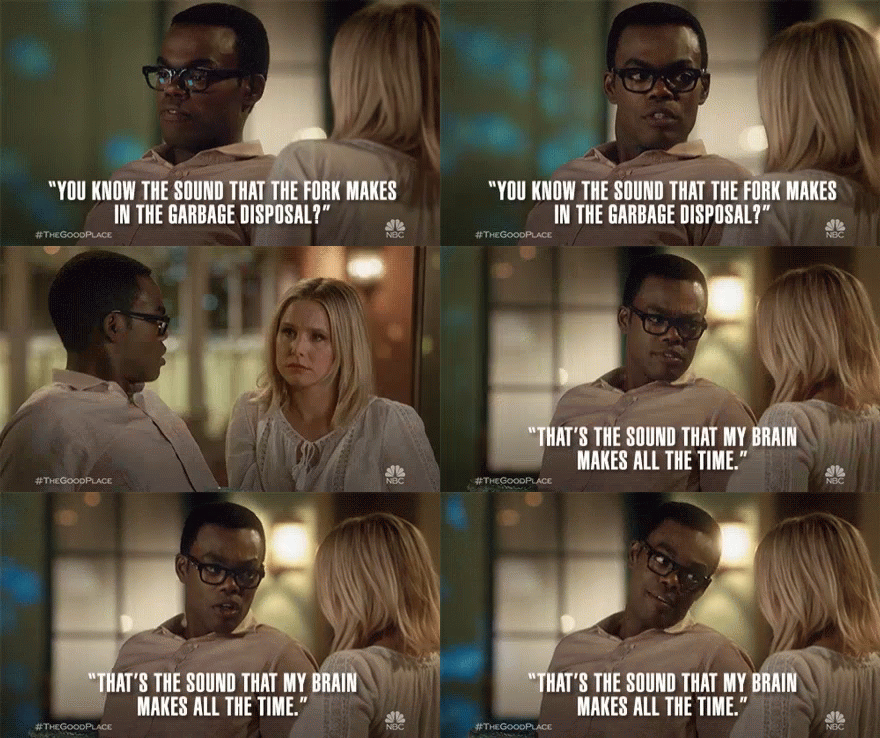
It wasn’t until I got deep into watching The Good Place that I felt like I had the language to describe what was going on with me. That feeling of my brain turning into a Möbius strip of indecision, twisting and circling with justifications, re-evaluations, and new new directions.

Nothing felt good enough, because nothing felt like it was definitely that one thing that would move me forward. That would take the “I’m a Writer” part of my career to the next level. To even help me figure out what level I was on.

Good Place - Chidi Fork Garbage Disposal.gif

I was going full-Chidi.


There’s a passage in Shunryu Suzuki’s Zen Mind, Beginner’s Mind about fruitless work towards a goal:

One day while he was studying under Nangaku, Baso was sitting, practicing zazen…

Nangaku saw him sitting like a great mountain or like a frog. Nangaku asked, “What are you doing?” “I am practicing zazen,” Baso replied. “Why are you practicing zazen?” “I want to attain enlightenment; I want to be a Buddha,” the disciple said. Do you know what the teacher did? He picked up a tile, and he started to polish it. In Japan, after taking a tile from the kiln, we polish it to give it a beautiful finish. So Nangaku picked up a tile and started to polish it. Baso, his disciple, asked, “What are you doing?” “I want to make this tile into a jewel,” Nangaku said. “How is it possible to make a tile a jewel?” Baso asked. “How is it possible to become a Buddha by practicing zazen?” Nangaku replied. “Do you want to attain Buddhahood? There is no Buddhahood besides your ordinary mind. When a cart does not go, which do you whip, the cart or the horse?” the master asked.

The book is one of my go-to totems for when I’m totally freaking out, and I happened to flip over to this passage. Fortunate timing.

And then I remembered a post from CJ Chilvers on the why of blogging in the present moment:

The pros advise that long-form writing (going deep into a subject) is the best way to get any real attention and deal with the way Google, Facebook and Twitter have transformed how information is consumed online. You post something epic once in a great while, and promote over and over. Attention spans are shorter and readers aren’t using RSS anymore. If you want attention and sales, you have to go out and grab the attention, then offer something with extreme value to get the authority to sell something. They’re correct.

The hobbyists (and one prominent pro — Seth Godin) profess that it’s the opposite that has the most positive impact on your life and mental health: short-form writing, and just getting your ideas out there. They’re correct.

I’ve been thinking about this in my own life and career for the past month and I think I’ve come up with a theory: one is a business model, one is a life model.

​I’ve watched this site get stale; turning instead to the pursuit of likes and retweets, and the spending too much time chasing the empty satisfaction that comes from a “good” tweet.

I haven’t spent enough time trying to see what I actually value, and what I actually want to get out of my brain and into the world.

I’ve spent so much time trying to re-define what success is, I stopped producing anything that could get me closer to… Well, any definition of feeling successful.

So, as I’m getting closer to my birthday at the end of the week, I’m resolving to be less precious this year. I’m resolving to stop treating a blog as a means to an end, but instead as an end unto itself. To focus on satisfaction instead of success.

Success is as much given as it is earned. Satisfaction doesn’t require outside intervention.

The only way I’ll be satisfied is if I learn to take pride in my words themselves instead of pride in how widely my words travel.

My phone isn’t the only thing I need to put away if I’m going to get real work done.

Enough for Today

The dishwasher broke on Thanksgiving. Even five people can generate a lot of dirty plates on Thanksgiving. Learning the basics of dishwasher diagnostics could wait for morning, but the dishes themselves couldn’t.

My mom took charge of cleanup (saying my wife and I had done all the cooking and needed a break). While scraping and scrubbing, she mentioned she’d learned something about my grandfather on her last trip down to West Virginia to visit her parents.

Everyone in the family knew he never earned his high school diploma. Even without it, he’d served in the Army, had a long career back home, raised four kids, and did a savvy job managing both his investments and the timber on his property.

But he’d kept part of that story a secret, even from his kids: He dropped out of school at ten years old.

His mother died. He needed to work odd jobs. It was just what he had to do.

And my mom told me about how he pushed all his kids to finish high school. It reminded me how he’d encouraged me to keep my grades up by paying me a quarter for every A on my report card. How he’d always remind me that your mind is the only thing that nobody can ever take away from you.

And I thought about the pride I heard when I called to tell him that I’d found a job teaching at a university. He left school at fourth grade, and now his grandson was a college professor.

There are bad days. Days when you feel like the brass ring you’re grasping for will always stay out of reach.

On those days, look to the people who care about you. See how you might be fulfilling their dreams.

See if that can be enough until tomorrow, when you have a chance to try again.

Boiling River

Early in the morning of our last day in Yellowstone, my wife, Dena, and my father-in-law wanted to take me to Boiling River.

Boiling River is where the Gardiner River meets up with a hot spring. You can climb into the water and have a soak, with the swirling current and shallow, rocky river bed forming an all-natural, certified organic hot tub.

Unfortunately, when we parked nearby, I couldn’t find my river shoes. On a cross-country road trip with six people, not enough space, and all their stuff, this kind of thing happens.

It would be a 25 minute drive back to the hotel, and we didn’t have time for a second round trip.

Dena could see the scowl forming on my face. “Don’t stew on it,” she said. We needed to get moving if we were going at all. My $5 Old Navy flip flops would have to be good enough.

As we walked along the gravel path to the swimmer’s entrance, Dena and her dad pointed out different parts of the river, and told me about how when they’d come down the other night, it had been packed with people. We were lucky to be out so early, since it looked like it would be easy to find a spot to sit down and relax.

My father-in-law also mentioned not to stick my head in the water, especially my ears, since the water might be swarming with brain-eating amoebas.

Seriously.

We hung our towels up on a fence and walked down a slope to the river’s edge. As soon as I dipped my feet in, I knew my flip flops weren’t a smart choice. The water pushed down as I lifted my foot up, creating drag with each step.

I took lower, gliding steps and did my best to curl my feet, trying to grip the flimsy plastic with my toes, while keeping my balance on the smooth, wobbly rocks.

After catching up with Dena and her dad, I sat down. The tension of the last few minutes melted away as I found a spot where the currents mixed to the perfect temperature.

I wasn’t thinking about brain-eating amoebas, or the days we’d spent crammed into cars driving out here, or or the logistics of bringing an almost-three-year-old on such a big trip.

I sat quietly, feeling the river flow around me. We watched a bird of prey glide in circles overhead.

But we needed to leave and meet back up with the rest of the family. I stood up and started following Dena back to the entrance.

I plodded upstream, taking my time, trying to get solid footing. I fell behind.

And then the current yanked a flip flop off my foot.

It shot downstream toward a shaggy, surfer-type. He tried to catch it, but it zipped past his grasp.

“Alright,” I thought. “Don’t stew on this.”

I don’t go outside barefoot. Even as a kid, I never liked direct contact between my feet and nature.

I took a moment to get my bearings. I looked up at Dena, then upstream past her to the swimmer’s entrance.

I planted my bare foot on a rock to see how it felt. A little slick, but solid.

Goal set, I reminded myself that sitting back down and staying in the river forever was not an option. While not ideal to walk back on one flip flop, it could be done, one step at a time.

And the next step I took sent my other flip flop flying down toward the surfer. He missed that one, too.

I’d love to say I made a dignified march in my bare feet back to shore, deftly navigating the current and shifting stones. But that would be lying.

The next few minutes involved a lot of struggling for traction on slippery, river-smoothed rocks, punctuated by sharp moments of pain stepping on smaller, jagged stones.

I wobbled, frantically waving my arms to keep from falling on my face (because let’s not forget about the brain-eating amoebas).

I misjudged the current as I moved toward a larger stone and smashed my big toe against a rock as I lost my footing. I swore. Then I looked up and saw two parents and their four-year-old son a few feet away.

I quickly convinced myself I had heard them speaking German so I could at the very least keep from feeling embarrassed about my language.

But even after all that, I made it back to the shore. I took my towel off the fence and sat down on a bench. I caught my breath.

I made it.

And then I looked over at the gravel path I still had to walk on to get back to the parking lot.

At this point, I didn’t even bother starting to stew on the problem.

When my feet pressed down on the gravel, I felt even more pain than I’d anticipated. It was the combination of tiny, pointy rocks and a week’s worth of already sore feet from sightseeing.

But the path was the only way back to the parking lot. I took it slow. Big steps, pausing whenever I caught a particularly bad jab.

And then something funny happened. A group of people walking past us the opposite way whispered “Is he barefoot?” with a mix of shock and awe.

I turned to Dena, about to crack up. “They think I’m a badass!”

So, I played the part. I took my hesitant, big steps up until the point where I saw someone coming. Then I switched to strutting, just to see if people would react.

It was a stupid game. I understand this. But it also kept me moving and made the situation a little funnier.

A few minutes in I noticed that every so often there was a span of chalky white logs, bolted to the ground on the sides of the path. I hadn’t noticed them on the walk to the river, but now I was using them as balance beams, reveling in how smooth they felt against my feet.

If every situation were so simple, we wouldn’t need reminders not to dwell on the problem itself and start looking for a solution. Compared to a lot of problems, “I’m in a river and need to get back out right now,” has a refreshing clarity.

Stewing, complaining, or otherwise dwelling on the problem acts as a form of denial. Denying that you’re ready to solve the problem. Denying that you can even believe that you have this problem. Denying that it’s your problem to solve. Denying that a solution exists.

You need to accept the problem before you can move past it, and once you’re in motion, the problem becomes less important than staying in motion.

In Praise of Bash

A closer look at a supporting player in GLOW

The Netflix cast and production team of the series GLOW have created some layered, dimensional characters with efficiency and humor. The show’s deep bench gives every cast member at least one moment in the spotlight over the first season’s ten episodes.

For the moment, I want to single out Bash, played by Chris Lowell.

Why Bash?

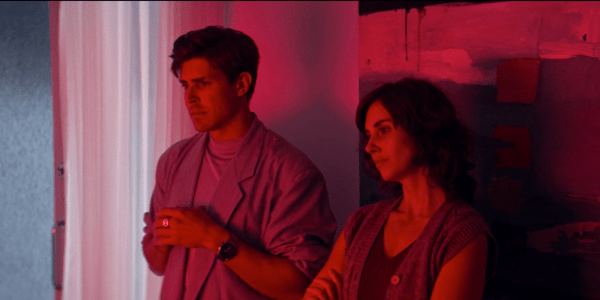
Looking At NEON.png

Is it missing the point when talking about a show focused on women’s wrestling with so many standout female performances to turn my attention to one of the male leads?

Maybe. But this isn’t just about him.

In fact, that’s the point I want to make about Bash’s character: This story isn’t about him.

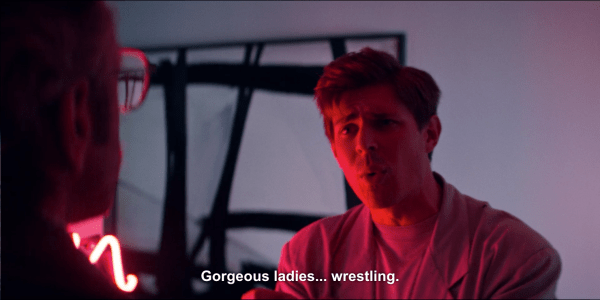
He says that Gorgeous Ladies Of Wrestling is his idea, and he maintains that he wants to make sure the execution matches his initial premise.

Gorgeous Ladies PAUSE Wrestling.png

With the plot elements involved, this could easily have been Bash’s story: The highs and lows of a trust-fund goofball who finds purpose by putting aside his selfish antics and maturing as he builds a tv show.

But that’s not this show’s story.

Bash is a supporting member of the cast, not only by the entertainment awards definition, but in how supportive he is of the other characters.

Like Max in Fury Road or Steve Trevor in Wonder Woman, Bash is an example of how to depict a man being supportive of a woman or group of women. He’s another reminder that gender dynamics in storytelling aren’t a zero sum game.

The Heel-Face Turn

Patron Of The Arts.png

When we first meet Sebastian “Bash” Howard, he’s doing all the things that would lead us to believe he’s going to be an antagonist or obstacle in the vein of a classic 80s villain.

  • He showed up in a helicopter, suggesting he’s totally out of touch with the other characters who are desperate for work.
  • He’s telling a personal anecdote about Ronald Reagan, further aligning himself with conservative, monied interests in a series focusing on a diverse group of underdogs.
  • He interrupts his introduction to ask that he be called by a nickname that he probably gave to himself.
  • He cancels rehearsal to invite everyone to a party at his mansion, which features an actual Lichtenstein and a working robot with a secret drug compartment.

It’s a clever ploy to play off of the audience’s expectations based on both Bash’s behavior and our genre savvy. This makes his sudden turn that much more satisfying.

What Bash Does for the Athletes

At the rehearsal, Bash listened to the women read through a script written by the director, Sam Sylvia, that featured a post-apocalyptic setting and roving gangs of women fighting for the right to breed with the last surviving man on Earth. The read-through goes unenthusiastically as the performers grapple with a thin sci-fi narrative held together by Sam’s sexual fantasies.

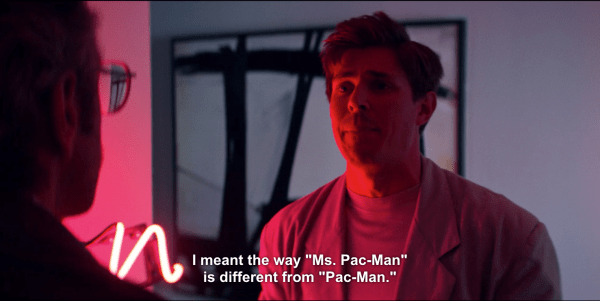
Bash confronts Sam about this, saying that when he asked for a different kind of wrestling show, this isn’t what he had in mind:

Ms Pac Man.png

Bash invites the women up to his costume room and tells them to explore it and try things on.

Inspire Your Characters.png

Bash is inviting these women to take an active role in the construction of the narrative they’re going to play out. He talks about Sam’s script being too complicated, and he wants to see something still heightened and fantastic, but grounded in some aspect of the women themselves.

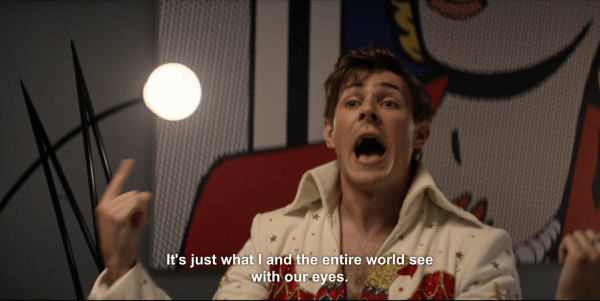
Let me be clear: Bash is not doing this just because he has a desire to empower these athletes. His suggestions involve leveraging regressive stereotypes that he justifies by saying that they need to play to the viewpoint of the audience.

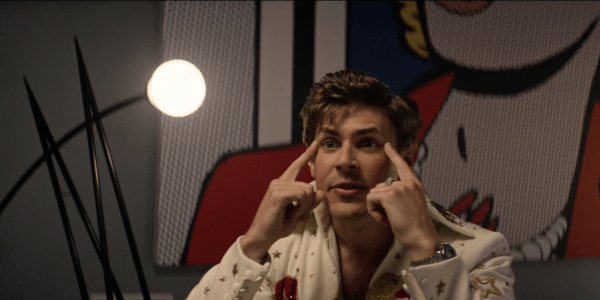
With Our Eyes.png

These Are Eyes.png
Bash wants to make sure you know what eyes are.

Ethnicities are shifted or amalgamated. Tammé, whose son goes to Stanford, gets re-christened as Welfare Queen. Everything is done to better label these women according to a generalized white, male gaze instead of Sam’s hyper-sexualized, exploitation film mindset.

And this is where it gets more complicated.

Early in this sequence of scenes, Bash starts speaking with Carmen, who will eventually take on the character Machu Picchu. Sam has cast her as the villainous Ogress, but Bash takes one look at her and sees her smile. He knows she’s not right to play a heel, and helps her find an identity more suited to who she really is.

And while so many of these wrestling aliases are created based on stereotypes, that initial spark kindles something in the women. A “So this is how you see me?” anger helps them find their enthusiasm for the entire project. It unlocks and directs a layer of rage and creativity.

Going off of this setup, one of the most memorable scenes of the entire season comes when Cherry and Tammé convince their tag team opponents to dress in Ku Klux Klan costumes. Cherry and Tammé are very aware of how their roles as Welfare Queen and Junk Chain have attached stereotypes that will play negatively to the audience. So they find a way to turn themselves into the heroes of the match.

They have a degree of control over the narrative, and they’re trying to leverage what they think the audience sees.

Aside from setting some key points about the world of wrestling and its expectations, Bash also has several direct interactions that support the wrestlers.

In working with Carmen throughout the season’s arc, he helps her to build her confidence and live up to the reputation her family’s wrestling dynasty.

Bash sits with Carmen in the parking lot while an EMT confirms that she’s had a panic attack after she runs from the ring at an early match. He recognizes how important this is to her, and wants to be supportive.

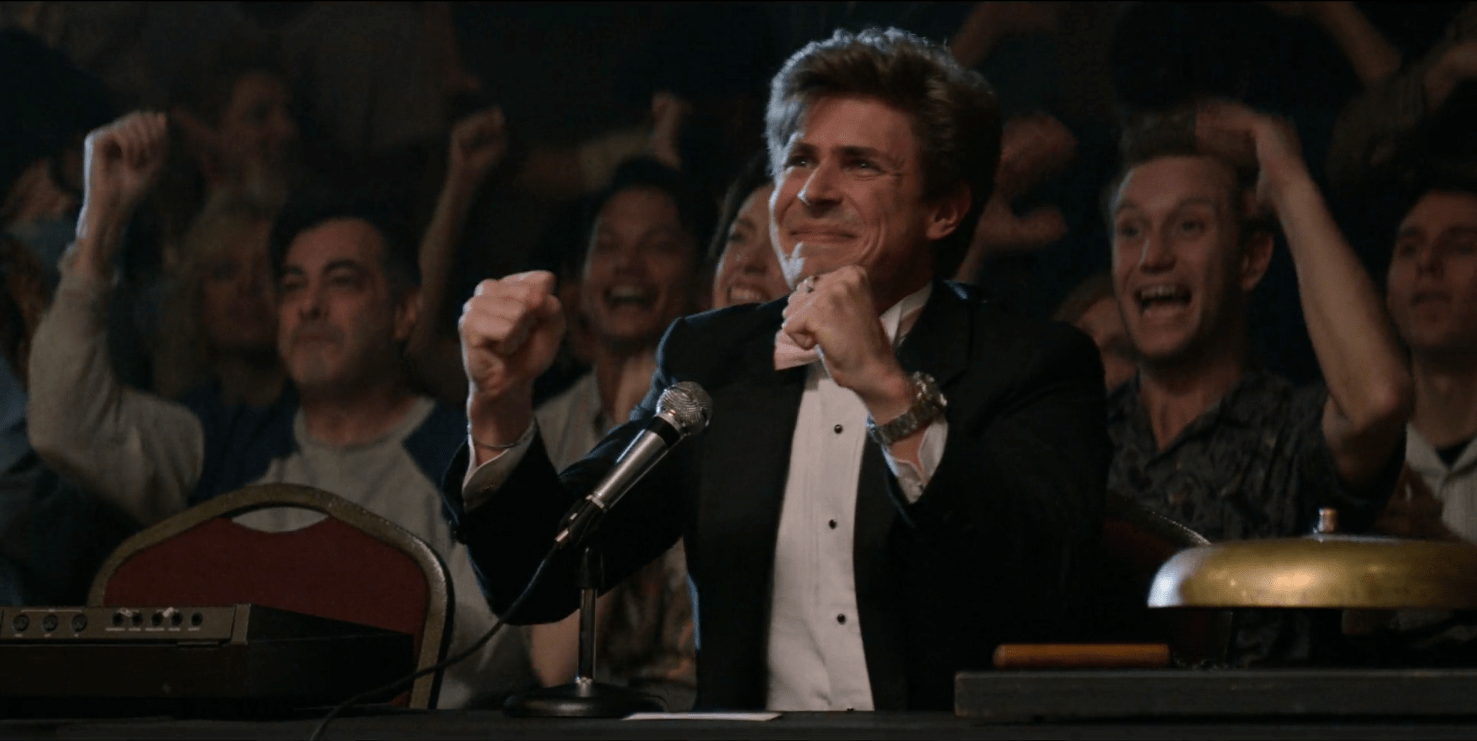
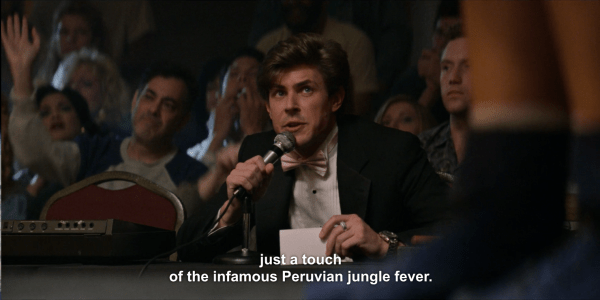
When she starts to feel the fear again at a match being taped live for the pilot of their tv show, one of the things that helps her find her strength is Bash, acting as the ringside announcer, turning her anxiety into part of her character.

Peruvian Fever.png

And when she pulls through and wins her match, Bash is one of the primary focuses of the camera. His enthusiasm for her victory reminds us that he didn’t just invest money in this wrestling show, but that he truly wants to see these athletes succeed.

Speaking of money, at a key moment when Bash’s mother cuts him off, everything is in danger of falling apart. The team needs to find the money to secure a venue for their live taping of a pilot episode.

Bash finds a solution, but he can’t do it alone.

Bash brings the women to crash his mother’s fundraising event for Nancy Reagan’s Just Say No campaign. He pretends that they’re from an organization called Wrestlers Against Drugs, and interrupts his introductory toast of his mother to step aside and let the women tell improvised stories to the wealthy donors.

The key here is that Bash isn’t the one making the big speech to get the money and save the day. He’s offering these women the opportunity to succeed on their own merits. He creates space for them to succeed where he failed, and he trusts that they’re capable.

And the women do not disappoint, coming up with stories of drug addiction and salvation through wrestling so compelling that the donations pile up, and even Bash’s mom sees that her son has partnered with some amazing women.

What This Means to Bash

But Bash isn’t just some Yuppie Yoda, helping women find their inner power through the drama and athleticism of professional wrestling. He gets something out of all this, too.

There’s this one scene near the end, and it’s why I focused so much on Bash after this first viewing of the show.

As everything comes together at the last minute, Ruth tells Bash that he needs to act as their announcer for the live taping of their matches. Bash says he was born for this:

Brought My Tuxedo.png

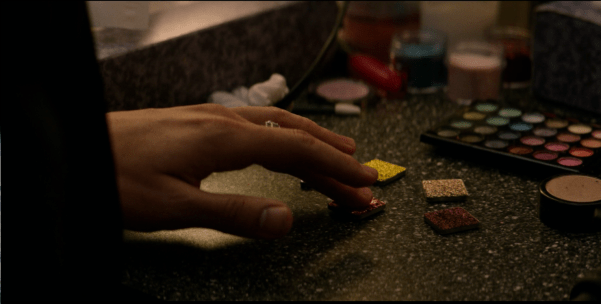
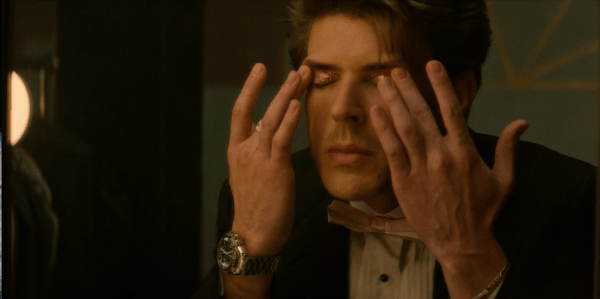
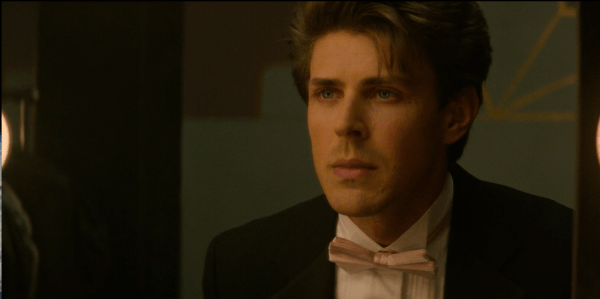
While everyone’s getting ready for their on-camera debut in the ring, Bash gets a quiet moment while he prepares.

Bash Mirror 1.pngBash Mirror 2.pngBash Mirror 3.png

Bash Mirror 4.png

Bash has spent a lot of time before this point helping other characters find strength and express themselves. We’re shown this one moment that shows him stepping in to character.

It’s a suggestion that Bash, too, feels that the spectacle allows him to re-craft his identity; to tap into something inside himself that normally stayed buried.

How To Show Support

GLOW is a show mainly populated by women, but unlike Sam’s script, there’s not a lack of men involved. Along with the recurring characters of Sam and Bash, several other men play a role in the story.

When characters are dimensional, treated with respect and dignity, and given solid, selfish motivations, there’s room for everyone.

Bash is an example of a well written ally. He’s imperfect, and his faults and mistakes provide conflict for the story. But his desire to help others comes from an expressed and understood need to fulfill his own goal.

That’s a key to strong supporting characters: They don’t know they’re a sidekick. Somehow their actions supporting the protagonist(s) should fulfill whatever desire drives them in the version of the story where they’re the lead.

The opening scene of the series features Ruth on an audition for the role of a secretary who interrupts her boss in the middle of a dramatic monologue to say his wife is on the phone. It’s making a point about the dearth of good roles available to women, and does so by highlighting an audition for a minor supporting character.

It highlights not only why Ruth and the other women of GLOW would latch on to the opportunity to take charge of their stories and shape this wrestling program to give themselves an opportunity to shine, and it also highlights what happens when writers create characters who act as punctuation.

Somebody has to come read for the role of the Nameless Interrupting Secretary. Somebody has to hope that they’ll get that three line part, because they’ve got rent to pay. Somebody spent years training themselves and honing their craft to prepare themselves to be on camera.

Does it honor that person’s effort to give them so little to do?

Does it show respect to the people who actually inhabit these positions in real life to depict them as functions of someone else’s story?

The story as a whole is richer from making sure every role feels lived in. Every person feels true, and not just a plot device.